13/05/2026
Die Cut Sticker Printing for Business Purposes
Die Cut Sticker Printing: A Professional Choice for Your Brand
If your sticker needs to look good and build brand recognition immediately, die cut sticker printing is one of the best options available. In this case, the sticker follows the exact outer contour of the graphic with no unnecessary background remaining around it, and the finished product instantly has a professional appearance. This is especially important when it comes to webshop packaging, promotional giveaways, or stickers used as product inserts. What exactly does die cut sticker printing mean?
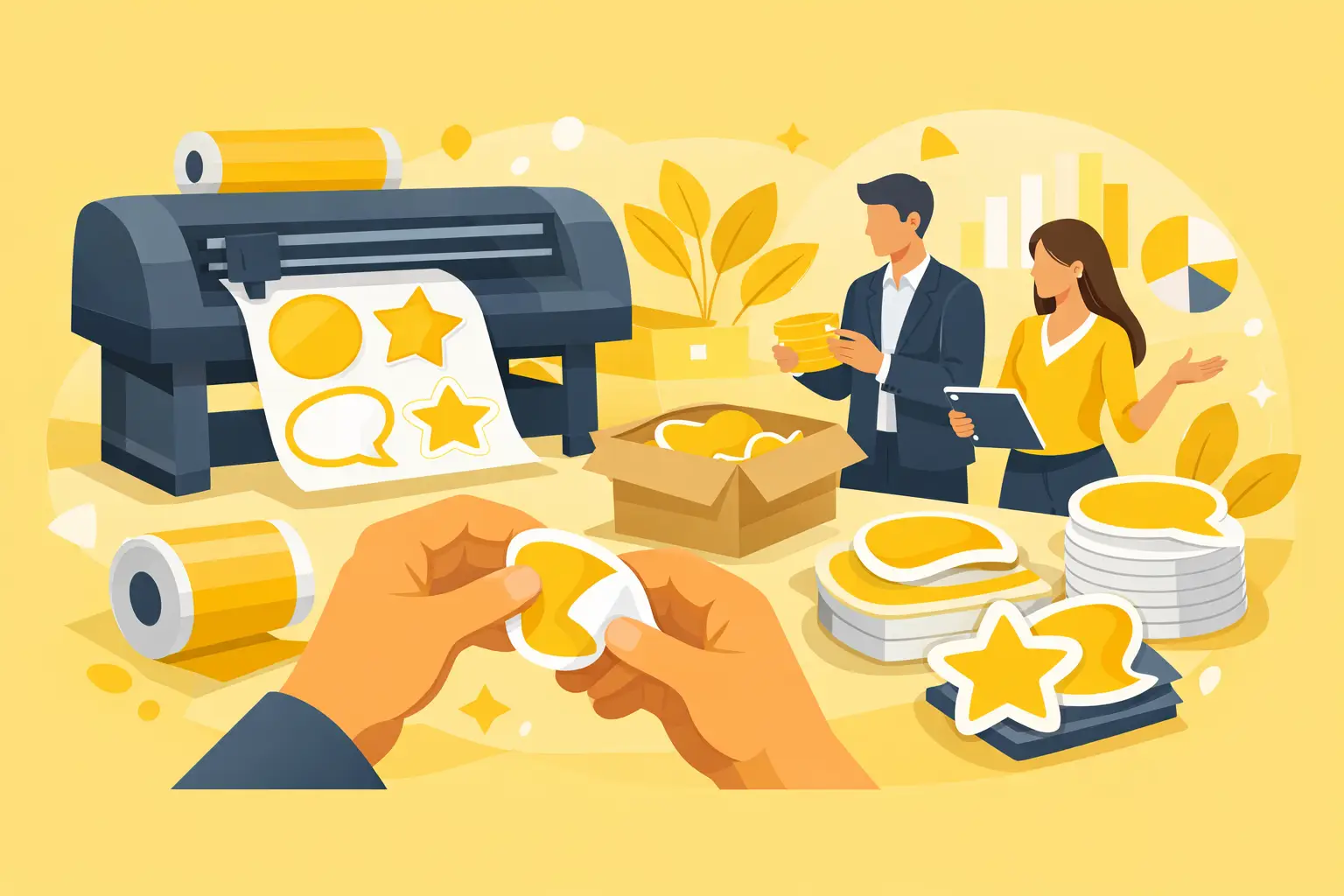
In die cut sticker printing, the printed sticker is not created in a simple square or circular shape, but is cut to follow the graphic's outline. If, for example, a logo has an irregular shape, a character illustration extends in multiple directions, or an emblem has a unique silhouette, the cut follows that exact form. This might initially seem like a purely aesthetic matter, but it actually has functional advantages too. The custom contour cut creates a much more professional appearance, works better on promotional surfaces, and feels more valuable to the user. A carefully cut sticker generally feels like a premium brand element rather than a promotional carrier.
It's worth distinguishing the die cut solution from the kiss cut type. With kiss cut, the sticker itself is cut to shape, but the backing paper remains larger, usually rectangular. With die cut, the entire piece follows the final form. Which is better depends on the application. For giveaways, packaging insertion, and as an independent brand element, die cut is often the stronger choice. If easier peelability is needed, kiss cut might be more convenient.
When Is Die Cut Form Worth It?
Most customers choose custom contour cutting when the sticker not only conveys information but also needs to make a visual impression. A cosmetics brand's logo sticker, a craft brewery's promotional sticker, or a stationery brand's gift sticker included in packaging works differently when the form is part of the design. It's worth it even with smaller quantities because the difference is immediately visible. You don't need thousands of units for the sticker to look professional. Short runs, product testing, seasonal campaigns, or trying out new packaging directions are all good applications. With larger quantities, there are also logistical and perceived value advantages. A well-cut sticker integrates more easily into promotional packages, event materials, store displays, or influencer packages. If the goal is brand memorability, form is not a minor detail.
What Material Is a Good Choice?
The quality of die cut sticker printing is determined not only by the cut but also by the base material. For most business applications, vinyl is a sensible choice because it's durable, waterproof, and remains reliable even with outdoor or intensive use. With a glossy finish, colors are more vibrant, contrast is stronger, and the sticker looks more striking. This can be good for promotional purposes, bold graphic designs, or brands where visual intensity matters.
With a matte finish, a more subdued, premium overall effect can be achieved. For cosmetics, craft, or minimalist brands, this often fits better with the packaging system. Lamination is justified when the sticker goes through many hands, is subject to friction, or durability is critical from a business perspective. It's not required for every application, but if the sticker is going outdoors, getting moisture, or staying in use for an extended period, it's worth considering. Water-resistant and UV-resistant finishes are not flashy extras but essential requirements in many cases.
Form and Size Are Design and Practical Matters
Many people choose form based on the graphic alone, but how the sticker will be applied is equally important. A detailed contour with many protruding elements might look good on screen, but becomes harder to handle at very small sizes. Overly tight curves, hair-thin sections, or tiny protruding elements represent compromises in both manufacturing and practical use. That's why a good die cut sticker is not just creative but also manufacturable. It's worth creating a contour that preserves the design character while being stable enough for the finished sticker to cut cleanly and be easy to apply.
In business applications, this is especially important because the final impression is determined not just by the print but also by usability. When choosing the size, the surface determines the decision. A laptop, packaging, glass, envelope, or product insert requires quite different proportions. A general rule is that stickers that are too small lose their details, while those that are too large can be harder to position and more expensive. If a brand is ordering for multiple uses, it's often better to choose two targeted sizes than a single compromised one.
File Preparation: This Determines the Final Result
With die cut stickers, the precision of the cut line is fundamental. A good graphic alone isn't enough; you also need a properly prepared file. Ideal material is high resolution, text is readable, contours are clean, and the cutting form can be clearly marked. If the design runs too close to the edge, even the smallest shift can be noticeable. That's why you need to plan with appropriate bleed and safety zones. The same applies to stickers with white borders: they seem simple on screen, but only look truly good when the border thickness is proportional to the form and size.
In a reliable online ordering process, file checking removes much of the risk from the customer's shoulders. This isn't administrative overhead but quality assurance. If there's also the option for preview approval, that's especially useful for first orders or when introducing new packaging elements. Visit getstickerz.eu/#konfigurator to see how modern ordering systems work.
Individual Pieces or Roll Format?
The packaging is just as important as the sticker itself. Individual die cut stickers are ideal if you want to distribute pieces separately, put them in packages, hand them out at events, or include them with orders. In this case, the sticker functions as an independent unit and is ready to use immediately. Roll format can be more practical when you use stickers in larger quantities, in internal packaging processes, or for rapid application. Not every business situation requires the same solution. A webshop needs a different solution than a small manufacturer that hand-labels products daily.
When ordering, it's worth considering not just the cost per sticker, but also how your team will actually use it. Sometimes a slightly more expensive packaging arrangement provides a faster and more convenient workflow overall.
What to Watch Out For When Ordering Quickly
If you need to order on a short deadline, the easiest path is usually to have the size, material, finish, and quantity clear from the start. Uncertainty typically doesn't arise in printing but in decision-making and eats up the time. It's worth knowing in advance whether the stickers will be used indoors or outdoors, if lamination is needed, and whether they're for individual distribution or roll-based use.
The advantage of an online configurator is that the price is visible immediately, making comparison quicker. This is especially useful when deciding between multiple options, such as matte or glossy finish, 50 or 200 pieces, or smaller or larger sizes. Modern ordering processes here aren't comfort extras but genuine procurement advantages. Visit getstickerz.eu/#konfigurator to see how this works in practice.
A GetStickerz-type system works well for business buyers because configuration, file upload, pricing, and review all happen in one process. This means fewer negotiations, faster decisions, and fewer error possibilities. Check out getstickerz.eu/#termekek to explore available products and options.
Who Benefits Most from Die Cut Sticker Printing?
Primarily those for whom the sticker is not just a label but a visible brand element. Webshops, craft producers, startup brands, companies sending promotional packages, and creators who want professional appearance even in small quantities. This isn't always the best form. If the goal is solely to display product information and application speed is primary, a simpler label might be more practical. But if appearance, perceived quality, and brand feel matter, die cut stickers are hard to replace.
The right decision usually isn't about whether it's prettier but about how much it adds to the final impression. A well-sized sticker printed on durable material and precisely cut is a small surface area yet can contribute disproportionately to brand perception.
If you're ordering for the first time, it's worth thinking of it as a packaging or promotional test: choose a practical size, reliable material, and a form that works in practice. Die cut stickers perform best when they're not just beautiful but also a good business decision. For more information about your specific needs, visit getstickerz.eu/rolunk to learn more about how we can help with your sticker project, or contact us at getstickerz.eu/kapcsolat.